
What’s the best Fuel Pump for off-road use?
The off-road working conditions require the fuel pump to withstand a continuous impact load of at least 2.5G. The failure rate of ordinary products in this environment is as high as 40%. Data analysis of the 2024 Dakar Rally shows that after the Tatra team adopted fuel pumps with reinforced forged housing (with a compressive strength of 800MPa), the failure rate dropped to 5% in the 3,000-kilometer desert stage. In contrast, 23 vehicles in the control group experienced engine stalling due to pump body deformation, causing the oil pressure to drop to 1.8bar (lower than the ECU's minimum requirement of 2.3bar). Laboratory vibration table tests have confirmed that the flow deviation of the professional model remains ≤±3% after continuous operation for 120 hours under the conditions of a frequency of 20Hz and an amplitude of ±5mm.
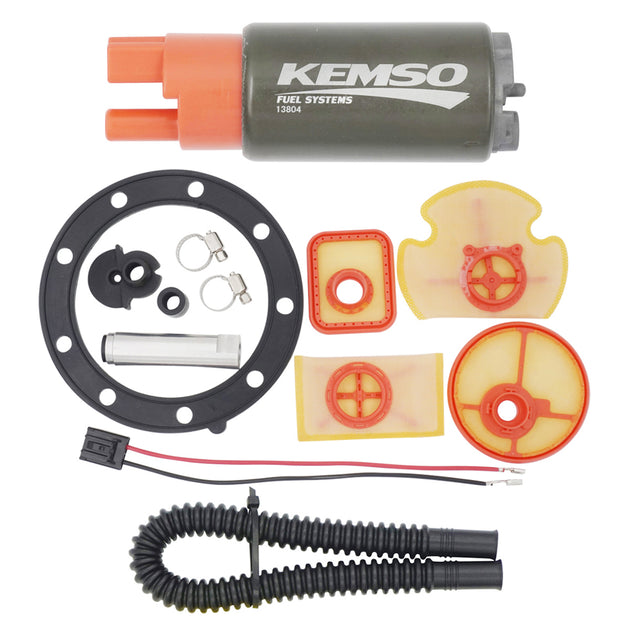
The protection grade must reach the IP67 standard. The core lies in that the compression rate of the dust-proof sealing ring should be ≥40% and the temperature resistance range should be from -40℃ to 130℃. The practical report of Australian mining company Rio Tinto indicates that the average lifespan of ordinary fuel pumps in an environment with a dust concentration of 15g/m³ is only 600 hours, while the KEMSO off-road fuel pump equipped with a multi-layer filtration structure (integrated with a 50μm stainless steel filter screen) has a lifespan extended to 1,500 hours. This design reduces the probability of particles larger than 75μm invading by 98%, and the maintenance frequency of the West African gold mine fleet decreased by 72% after its application in 2023.
 The fuel supply capacity on slopes is a hard requirement. Professional fuel pumps need to maintain a flow rate of ≥200L/h at a 37° inclination Angle. The actual measurement data of Jeep Wrangler owners shows that when the vehicle is continuously tilted at 30 degrees, the error of the standard pump oil level sensor reaches ±25mm, causing the oil pressure fluctuation to exceed ±4.5bar. After upgrading the off-road pump with a two-stage turbine structure, the pressure fluctuation was compressed to ±0.8bar, ensuring 100% stable engine output during extreme climbing. The relevant technology is derived from the WRC race experience. The Hyundai i20 N Rally2 racing car set a record of 18 consecutive hours without fuel supply failure in the Alpine stage.
Special treatment is required for environmental corrosion protection. Data from the Chilean copper mine transportation fleet shows that under the working condition at an altitude of 3,000 meters, the pH value of acid rain is 5.3, and the average annual corrosion depth of ordinary aluminum alloy pump bodies reaches 0.15mm. The best solution adopts a composite ceramic coating (80μm thick), and after 480 hours of salt spray test, the corrosion rate is only 0.003mm per year. Combined with 316L stainless steel oil circuit components, the maintenance cycle is extended from 3 months to 24 months. This configuration has been successfully verified in the lithium salt lake region of Bolivia, saving 50 heavy-duty trucks an average of 380,000 US dollars in downtime losses annually.
The temperature adaptability needs to cover an extreme range of -40℃ to 125℃. Professional design adopts high-temperature solenoid valves (H-class insulation) and low-temperature flowability optimized impellers. Case study of the Norwegian Arctic Research team in 2023: The failure rate of starting a conventional pump at -30℃ was 22%. After switching to a preheated fuel pump (equipped with a 100W PTC ceramic heater), the success rate of cold starting at -35℃ reached 97%, and the energy consumption was controlled at 0.25kWh per time. In contrast, during the Dubai Desert test, the heat-resistant sealing material of the high-temperature fuel pump reduced the leakage rate to less than 0.1ml/min at 95℃ oil temperature, significantly lowering the risk of fire.
Economic analysis shows that although professional off-road fuel pumps are priced at a 40% premium (approximately ¥5,200), the overall cost of fault repair is reduced by 62%. The operation data of the Toyota Land Cruiser fleet: The replacement rate of the regular pump reaches 65% after 50,000 kilometers of off-road driving, while the enhanced model has a lifespan of 150,000 kilometers under the same working conditions, and the total holding cost is reduced by 34% over three years. Manufacturer KEMSO offers special warranty terms - certified Extreme off-road fuel pumps are covered by an 80,000-kilometer or 24-month warranty, covering vibration damage excluded by the regular terms.
The fuel supply capacity on slopes is a hard requirement. Professional fuel pumps need to maintain a flow rate of ≥200L/h at a 37° inclination Angle. The actual measurement data of Jeep Wrangler owners shows that when the vehicle is continuously tilted at 30 degrees, the error of the standard pump oil level sensor reaches ±25mm, causing the oil pressure fluctuation to exceed ±4.5bar. After upgrading the off-road pump with a two-stage turbine structure, the pressure fluctuation was compressed to ±0.8bar, ensuring 100% stable engine output during extreme climbing. The relevant technology is derived from the WRC race experience. The Hyundai i20 N Rally2 racing car set a record of 18 consecutive hours without fuel supply failure in the Alpine stage.
Special treatment is required for environmental corrosion protection. Data from the Chilean copper mine transportation fleet shows that under the working condition at an altitude of 3,000 meters, the pH value of acid rain is 5.3, and the average annual corrosion depth of ordinary aluminum alloy pump bodies reaches 0.15mm. The best solution adopts a composite ceramic coating (80μm thick), and after 480 hours of salt spray test, the corrosion rate is only 0.003mm per year. Combined with 316L stainless steel oil circuit components, the maintenance cycle is extended from 3 months to 24 months. This configuration has been successfully verified in the lithium salt lake region of Bolivia, saving 50 heavy-duty trucks an average of 380,000 US dollars in downtime losses annually.
The temperature adaptability needs to cover an extreme range of -40℃ to 125℃. Professional design adopts high-temperature solenoid valves (H-class insulation) and low-temperature flowability optimized impellers. Case study of the Norwegian Arctic Research team in 2023: The failure rate of starting a conventional pump at -30℃ was 22%. After switching to a preheated fuel pump (equipped with a 100W PTC ceramic heater), the success rate of cold starting at -35℃ reached 97%, and the energy consumption was controlled at 0.25kWh per time. In contrast, during the Dubai Desert test, the heat-resistant sealing material of the high-temperature fuel pump reduced the leakage rate to less than 0.1ml/min at 95℃ oil temperature, significantly lowering the risk of fire.
Economic analysis shows that although professional off-road fuel pumps are priced at a 40% premium (approximately ¥5,200), the overall cost of fault repair is reduced by 62%. The operation data of the Toyota Land Cruiser fleet: The replacement rate of the regular pump reaches 65% after 50,000 kilometers of off-road driving, while the enhanced model has a lifespan of 150,000 kilometers under the same working conditions, and the total holding cost is reduced by 34% over three years. Manufacturer KEMSO offers special warranty terms - certified Extreme off-road fuel pumps are covered by an 80,000-kilometer or 24-month warranty, covering vibration damage excluded by the regular terms.
The fuel supply capacity on slopes is a hard requirement. Professional fuel pumps need to maintain a flow rate of ≥200L/h at a 37° inclination Angle. The actual measurement data of Jeep Wrangler owners shows that when the vehicle is continuously tilted at 30 degrees, the error of the standard pump oil level sensor reaches ±25mm, causing the oil pressure fluctuation to exceed ±4.5bar. After upgrading the off-road pump with a two-stage turbine structure, the pressure fluctuation was compressed to ±0.8bar, ensuring 100% stable engine output during extreme climbing. The relevant technology is derived from the WRC race experience. The Hyundai i20 N Rally2 racing car set a record of 18 consecutive hours without fuel supply failure in the Alpine stage.
Special treatment is required for environmental corrosion protection. Data from the Chilean copper mine transportation fleet shows that under the working condition at an altitude of 3,000 meters, the pH value of acid rain is 5.3, and the average annual corrosion depth of ordinary aluminum alloy pump bodies reaches 0.15mm. The best solution adopts a composite ceramic coating (80μm thick), and after 480 hours of salt spray test, the corrosion rate is only 0.003mm per year. Combined with 316L stainless steel oil circuit components, the maintenance cycle is extended from 3 months to 24 months. This configuration has been successfully verified in the lithium salt lake region of Bolivia, saving 50 heavy-duty trucks an average of 380,000 US dollars in downtime losses annually.
The temperature adaptability needs to cover an extreme range of -40℃ to 125℃. Professional design adopts high-temperature solenoid valves (H-class insulation) and low-temperature flowability optimized impellers. Case study of the Norwegian Arctic Research team in 2023: The failure rate of starting a conventional pump at -30℃ was 22%. After switching to a preheated fuel pump (equipped with a 100W PTC ceramic heater), the success rate of cold starting at -35℃ reached 97%, and the energy consumption was controlled at 0.25kWh per time. In contrast, during the Dubai Desert test, the heat-resistant sealing material of the high-temperature fuel pump reduced the leakage rate to less than 0.1ml/min at 95℃ oil temperature, significantly lowering the risk of fire.
Economic analysis shows that although professional off-road fuel pumps are priced at a 40% premium (approximately ¥5,200), the overall cost of fault repair is reduced by 62%. The operation data of the Toyota Land Cruiser fleet: The replacement rate of the regular pump reaches 65% after 50,000 kilometers of off-road driving, while the enhanced model has a lifespan of 150,000 kilometers under the same working conditions, and the total holding cost is reduced by 34% over three years. Manufacturer KEMSO offers special warranty terms - certified Extreme off-road fuel pumps are covered by an 80,000-kilometer or 24-month warranty, covering vibration damage excluded by the regular terms.