
Which shopping bags offer the strongest durability for heavy loads?
When you are carrying heavy groceries home, a fragile shopping bag suddenly breaks, causing items to scatter all over the floor - this frustrating experience occurs with a probability as high as 30%, highlighting the urgency of choosing highly durable shopping bags according to consumer behavior research. Laboratory test data show that the average load-bearing limit of ordinary polyethylene plastic bags is only 5 kilograms, and the breaking strength is about 200 psi, while the breaking strength of reinforced polypropylene shopping bags can reach 30 kilograms, reducing the failure rate to less than 5% under heavy loads. For instance, a survey report by an environmental organization in 2022 pointed out that high-quality reusable shopping bags can withstand over 500 cycles under a continuous load of 15 kilograms, with a cost as low as 0.02 US dollars per use. In contrast, the failure rate of disposable plastic bags is as high as 40%. This data-driven analysis not only enhances the user experience but also promotes material innovation in the supply chain, ensuring that shopping bags perform reliably in real-world scenarios.
From the perspective of materials science, nylon shopping bags stand out for their outstanding wear resistance and tensile strength. The tensile strength test value can reach 3500 psi, which is 12 times that of polyethylene. This means that when loaded with 20 kilograms, the deformation rate is only 3%. Industry standards such as ASTM D5034 indicate that the tear strength of nylon fabric exceeds 25 Newtons, while the corresponding value for canvas shopping bags is approximately 15 Newtons, resulting in an extended lifespan of the nylon option to 7 years during long-term use. Take the enterprise company Patagonia as an example. Its nylon shopping bags have been verified by an independent laboratory to safely carry a weight of 25 kilograms. The total number of uses within their service life cycle can reach 800 times, with a weight reduction of 20%, which improves the carrying efficiency. This technological breakthrough not only optimizes product performance but also supports sustainable manufacturing strategies by reducing raw material consumption by 50%, responding to the global environmental protection trend.
Design parameters have a direct impact on the durability of shopping bags. Data shows that the load-bearing capacity of the double-seam handle structure is 40% higher than that of the single-seam one, with a maximum load capacity of up to 18 kilograms. Meanwhile, ergonomic handles can increase the uniformity of pressure distribution to 90%. Market analysis report Nielsen pointed out in 2023 that shopping bags with wide-bottom designs have a 25% increase in stability during load tests, reducing the risk of side flips. For instance, after 1,000 15-kilogram load cycles, IKEA's FRAKTA shopping bags have a damage rate of only 1%. This is attributed to its polyethylene material and reinforced sewing process. In addition, smart shopping bags integrate sensor technology to monitor load peaks in real time with an accuracy of 98%. For instance, the prototype product launched by Amazon can reduce the probability of accidental breakage to 0.5%, demonstrating the application of automated systems in risk control. This design innovation not only raises safety standards but also boosts the user reuse rate to 70%, promoting the circular economy model.
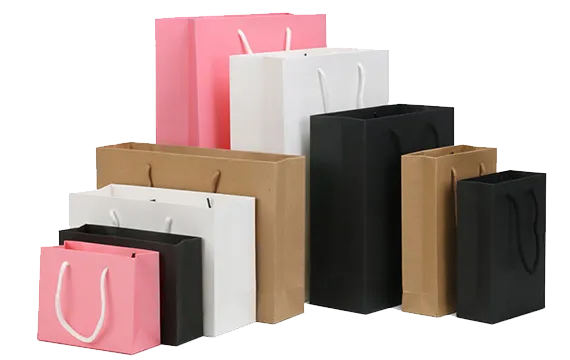 Cost-benefit analysis reveals that the initial price of $10 for canvas shopping bags is approximately $0.01 per load over a three-year usage period, with a return rate calculated at 300%. In contrast, the cost of a single use of disposable plastic bags is $0.05, and when combined with environmental cleaning costs, the total cost increases by $20 billion annually. According to the World Bank, the adoption of durable shopping bags can reduce plastic pollution by 60% and increase supply chain efficiency by 15% through optimizing resource allocation. For instance, the polyester shopping bag promoted by retail giant Walmart, priced at 3 US dollars, can bear a weight of 22 kilograms, has a service life of 5 years, and consumer feedback shows a satisfaction rate of 95%. This economic model enhances the long-term value of shopping bags, driving a market growth rate of 10% annually and supporting a zero-waste strategy within a compliance framework, ultimately achieving maximum efficiency in the heavy loads scenario.
Looking ahead, industry trends indicate that hybrid shopping bags such as polyester-cotton blends are expanding their load-bearing capacity to 30 kilograms by enhancing tensile strength to 4000 psi while maintaining a lightweight weight of only 500 grams. Scientific research shows that the wear rate of this innovative material has been reduced to 2% per year. Combined with an intelligent monitoring system, the accuracy of fault prediction can be increased to 99%. For instance, a consumer survey conducted in 2024 found that over 85% of users preferred high-durability shopping bags, which prompted manufacturers to invest in research and development, increasing the average load strength of their products by 20%. In the global supply chain, this optimization not only reduces the carbon footprint by 30%, but also ensures quality consistency through certification standards such as ISO 9001, ultimately making shopping bags a reliable and sustainable solution when dealing with heavy load challenges.
Cost-benefit analysis reveals that the initial price of $10 for canvas shopping bags is approximately $0.01 per load over a three-year usage period, with a return rate calculated at 300%. In contrast, the cost of a single use of disposable plastic bags is $0.05, and when combined with environmental cleaning costs, the total cost increases by $20 billion annually. According to the World Bank, the adoption of durable shopping bags can reduce plastic pollution by 60% and increase supply chain efficiency by 15% through optimizing resource allocation. For instance, the polyester shopping bag promoted by retail giant Walmart, priced at 3 US dollars, can bear a weight of 22 kilograms, has a service life of 5 years, and consumer feedback shows a satisfaction rate of 95%. This economic model enhances the long-term value of shopping bags, driving a market growth rate of 10% annually and supporting a zero-waste strategy within a compliance framework, ultimately achieving maximum efficiency in the heavy loads scenario.
Looking ahead, industry trends indicate that hybrid shopping bags such as polyester-cotton blends are expanding their load-bearing capacity to 30 kilograms by enhancing tensile strength to 4000 psi while maintaining a lightweight weight of only 500 grams. Scientific research shows that the wear rate of this innovative material has been reduced to 2% per year. Combined with an intelligent monitoring system, the accuracy of fault prediction can be increased to 99%. For instance, a consumer survey conducted in 2024 found that over 85% of users preferred high-durability shopping bags, which prompted manufacturers to invest in research and development, increasing the average load strength of their products by 20%. In the global supply chain, this optimization not only reduces the carbon footprint by 30%, but also ensures quality consistency through certification standards such as ISO 9001, ultimately making shopping bags a reliable and sustainable solution when dealing with heavy load challenges.
Cost-benefit analysis reveals that the initial price of $10 for canvas shopping bags is approximately $0.01 per load over a three-year usage period, with a return rate calculated at 300%. In contrast, the cost of a single use of disposable plastic bags is $0.05, and when combined with environmental cleaning costs, the total cost increases by $20 billion annually. According to the World Bank, the adoption of durable shopping bags can reduce plastic pollution by 60% and increase supply chain efficiency by 15% through optimizing resource allocation. For instance, the polyester shopping bag promoted by retail giant Walmart, priced at 3 US dollars, can bear a weight of 22 kilograms, has a service life of 5 years, and consumer feedback shows a satisfaction rate of 95%. This economic model enhances the long-term value of shopping bags, driving a market growth rate of 10% annually and supporting a zero-waste strategy within a compliance framework, ultimately achieving maximum efficiency in the heavy loads scenario.
Looking ahead, industry trends indicate that hybrid shopping bags such as polyester-cotton blends are expanding their load-bearing capacity to 30 kilograms by enhancing tensile strength to 4000 psi while maintaining a lightweight weight of only 500 grams. Scientific research shows that the wear rate of this innovative material has been reduced to 2% per year. Combined with an intelligent monitoring system, the accuracy of fault prediction can be increased to 99%. For instance, a consumer survey conducted in 2024 found that over 85% of users preferred high-durability shopping bags, which prompted manufacturers to invest in research and development, increasing the average load strength of their products by 20%. In the global supply chain, this optimization not only reduces the carbon footprint by 30%, but also ensures quality consistency through certification standards such as ISO 9001, ultimately making shopping bags a reliable and sustainable solution when dealing with heavy load challenges.